When a garage door heads down and springs back up, it isn't malfunctioning - it's protecting. The auto-reverse system believes something is in the door's path, and your job is to figure out what convinced it. In practice, it's nearly always one of these four things.
1. Blocked or misaligned safety sensors
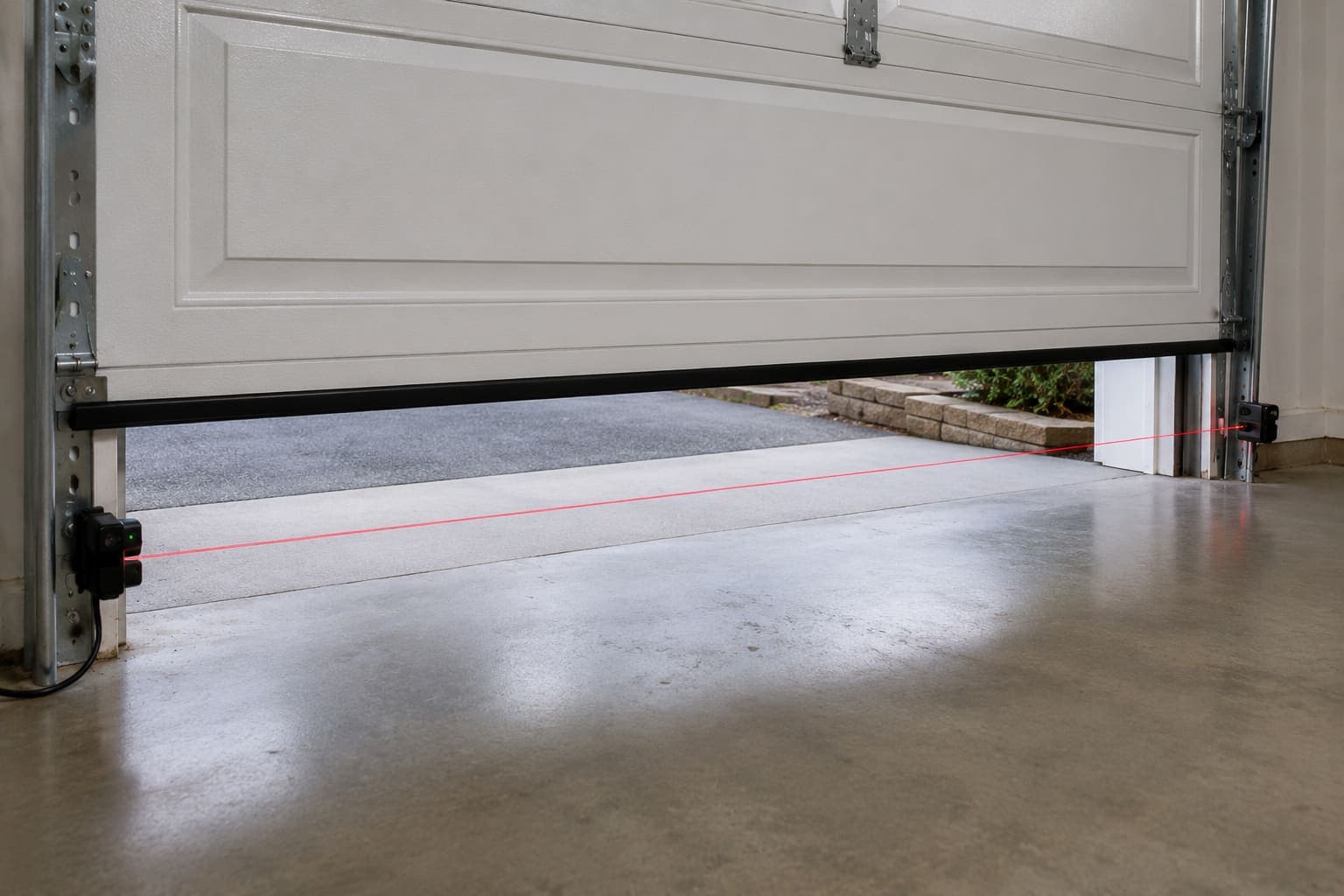
The most common cause by far. Anything crossing the invisible beam - a broom handle, cobwebs, low sunlight glare, even a dirty lens - makes the door reverse instantly. Clean both lenses and make sure both indicator lights are solid, not blinking.
2. Travel limits set wrong
The opener has to know exactly where the floor is. If the down-limit is set too far, the door presses into the concrete, thinks it hit an obstacle, and reverses. Limits drift over time; your opener manual shows the adjustment dials or buttons.
3. Close force set too low
Doors get heavier to move in cold weather or as rollers wear - a familiar story in Colorado winters. If the force setting can't overcome that resistance, the opener interprets stiffness as an obstruction. Small force adjustments are DIY-safe - but if you're cranking it up repeatedly, something mechanical is binding and needs attention.
4. Something in the tracks
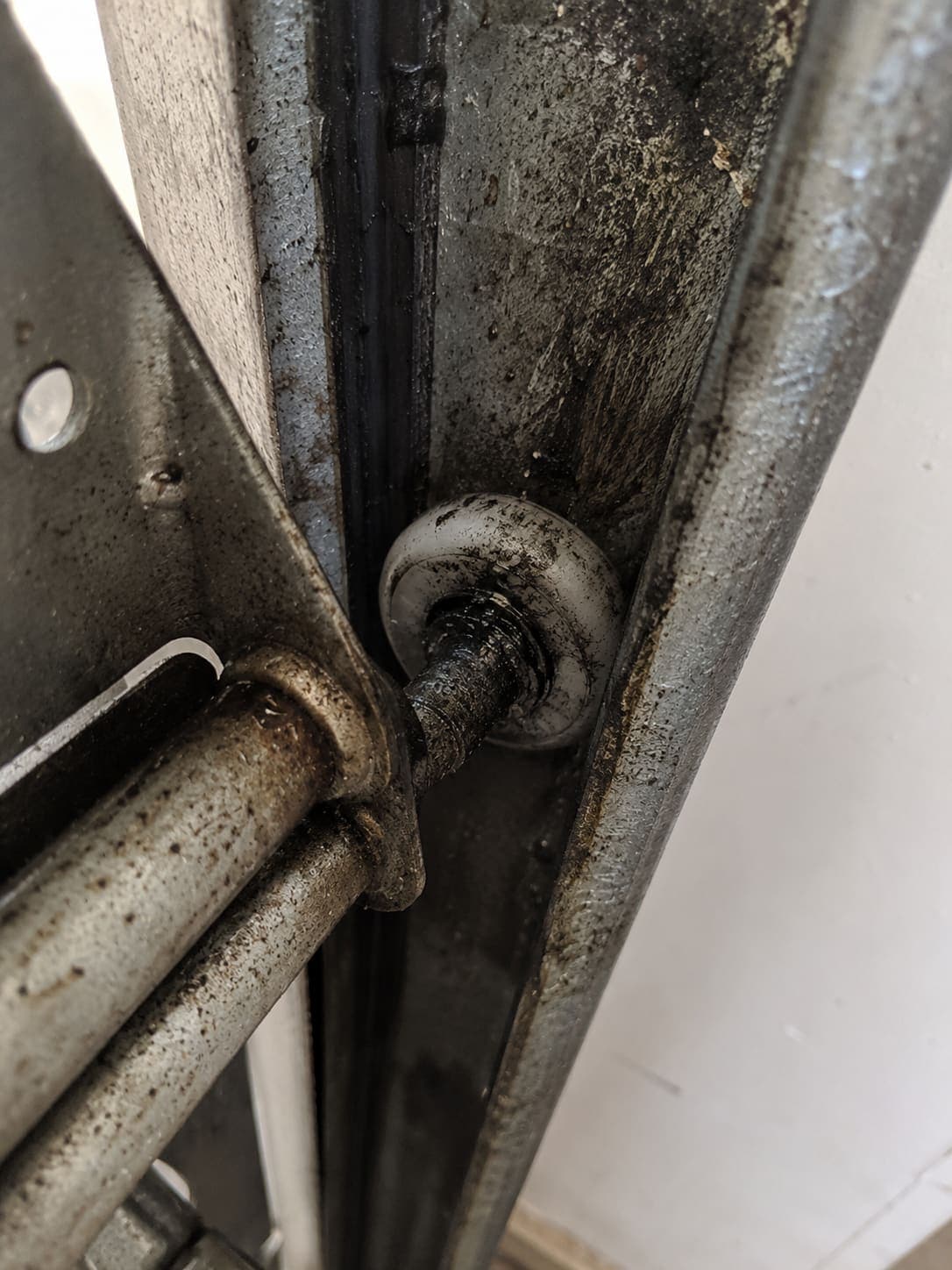
A pebble, a bent track section, or a failing roller creates a hard stop the opener treats as an obstacle. Look along both tracks with a flashlight and never try to hammer a bent track straight - it will bend again, worse.
Still reversing?
If the sensors are aligned and the limits are set, the cause is usually mechanical - worn rollers, track damage, or a failing opener logic board. A technician can pinpoint it in one visit.