Your springs, not your opener, do the heavy lifting every time the door moves - and in Colorado, where a warm afternoon can turn into a hard freeze overnight, that spring steel gets cycled harder than in most states. When a spring lets go, the door instantly becomes several hundred pounds of dead weight, usually with a car behind it. Fortunately, springs almost always telegraph the failure. Watch for these signs.
1. The door feels heavier than usual
A properly balanced door should lift with one hand when the opener is disconnected. If the opener strains, hums, or the door feels like a workout to lift manually, the spring is losing tension and nearing the end of its life.
2. Visible gap or stretching in the coil
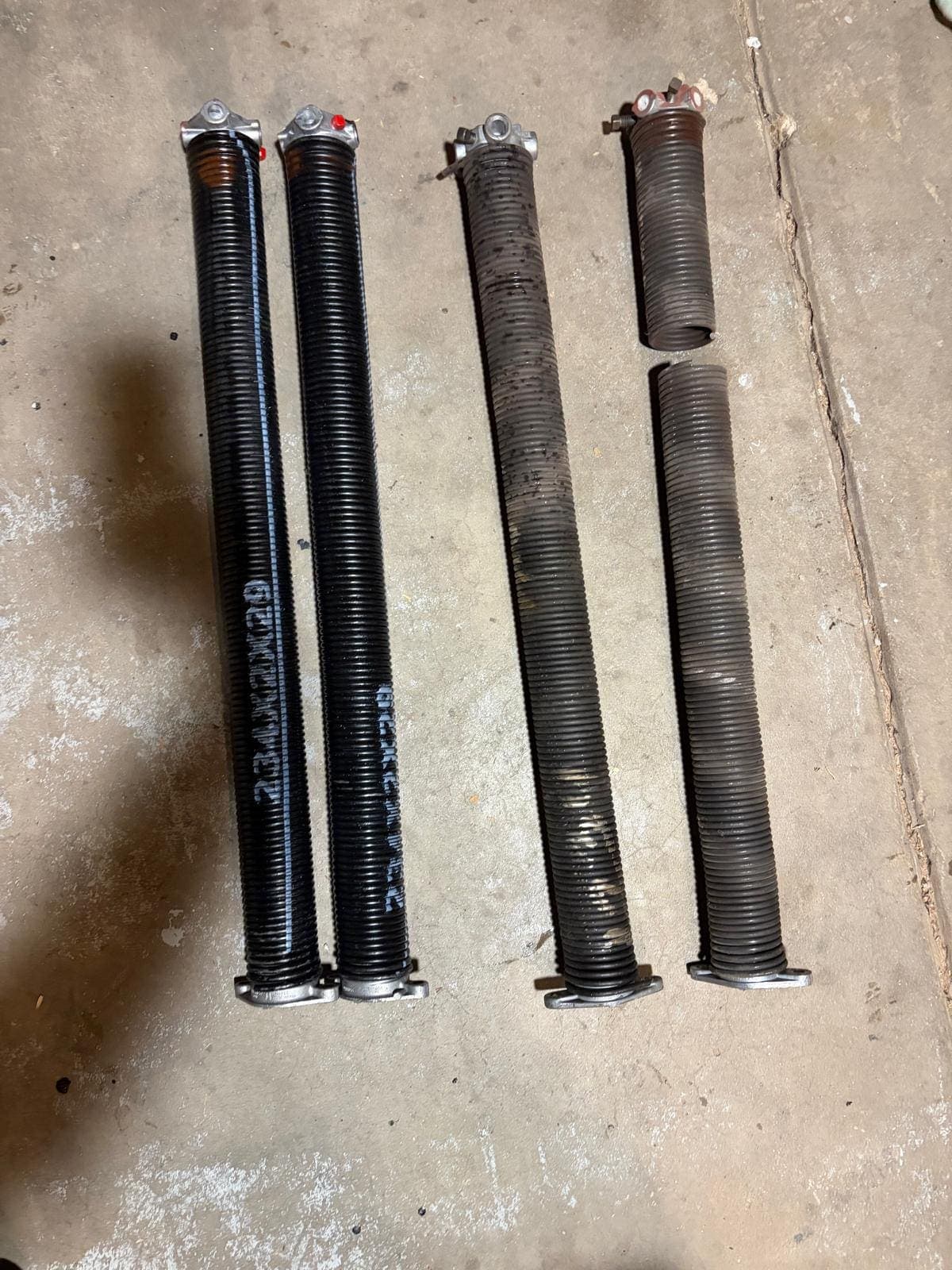
Look above your door. A torsion spring should be one tight, continuous coil. A visible gap means the spring has already broken; noticeable stretching or separation means it's close. Don't operate the door if you see either.
3. The door opens crooked or jerks
On two-spring systems, one weakening spring makes the door lift unevenly. A crooked door binds in the tracks and damages panels, rollers, and cables - turning one repair into several.
4. Loud creaking or popping sounds
Springs under failing tension creak, groan, or pop during operation. A single loud bang from the garage - often compared to a gunshot - means the spring has already snapped.
5. The spring is past its cycle life
Most springs are rated for about 10,000 open-close cycles - roughly 7-10 years of typical use, and often less here, because Colorado's daily temperature swings fatigue spring steel faster. If yours are in that range, replacing them on your schedule beats a failure on the spring's schedule.
What to do if you spot these signs
Never attempt spring replacement yourself - springs store enormous tension and cause serious injuries every year. Our technicians replace torsion and extension springs same-day, with parts on the truck and a written warranty.